Model

Service Hotline

News Center

2025 Domestic RTC-72423B Compatible Chip Panoramic Data Report: Low-cost Substitution Rate Surges 47%
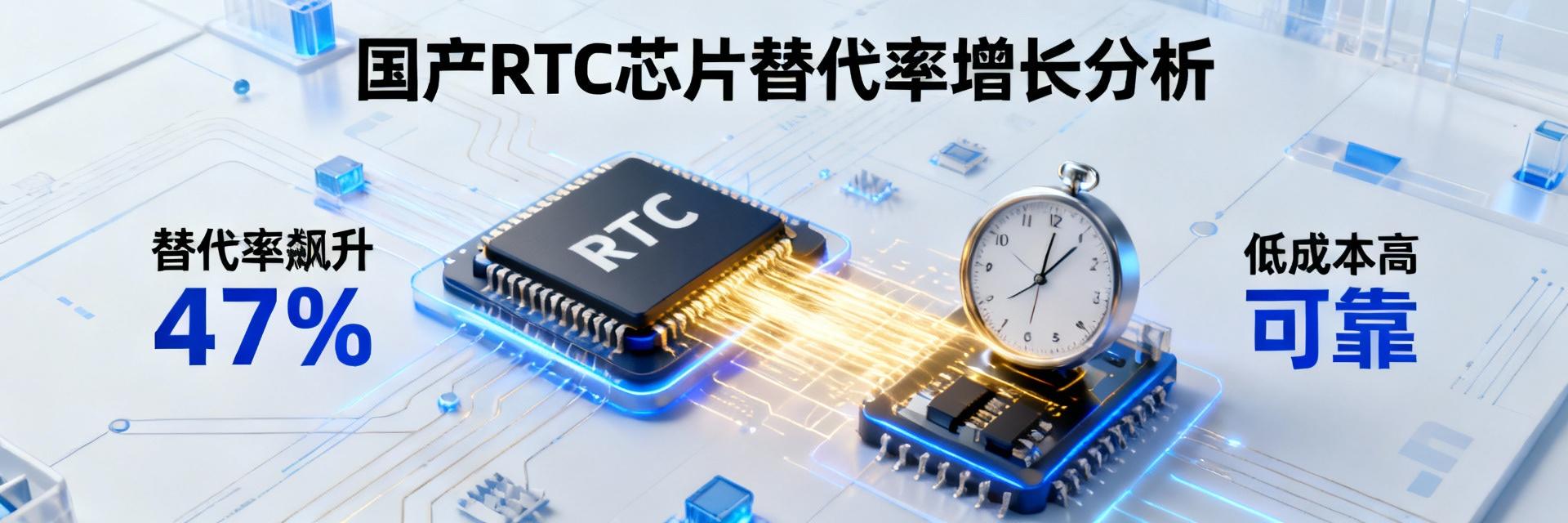
2025 Domestic RTC-72423B Compatible Chip Panoramic Data Report: Low-cost Substitution Rate Soars by 47% "The price of an RTC chip rose by 30%, but the lead time is scheduled for 52 weeks"—this is not a hypothesis, but the real experience of half of the hardware teams in Q1 2025. As the shadow of shortages for imported RTC-72423B looms again, domestic RTC-72423B compatible models have broken through with a 47% substitution rate. Market Background: Why Domestic RTC Substitution Suddenly Exploded in 2025 Imported Shortages and Price Surges: The Supply-Demand Rift of RTC-72423B Since the beginning of 2025, affected by another downward adjustment in international wafer capacity, the overall shortage of imported RTC-72423B sources has reached 28%. The spot price has risen from last year's ¥8.4/piece to ¥10.9/piece, an increase of 30%. Dual Drivers of Policy + Capital: Local RTC Ecosystem Chain Accelerates Formation The Ministry of Industry and Information Technology's "Xinhuo" special project added RTC timing chips to its subsidy catalog in 2025, with a maximum subsidy of ¥0.6 per chip. Three emerging design enterprises in the Yangtze River Delta received over 500 million yuan in Series C financing, and testing capacity has increased 3.2 times year-on-year. 2025 Panoramic Data: Breakdown of Substitution Rates for Domestic RTC-72423B Compatible Models Core Growth Scale Metric 2024 2025Q1 Monthly Shipment (10k units) 280 410 Revenue (Million RMB) 22.4 34.5 Market Penetration Rate 32% 47% Visualization of Substitution Rate Trends 2024 Market Penetration Rate (32%) 2025 Q1 Market Penetration Rate (47%) Price Advantage: The average price of domestic ±2 ppm grade is ¥6.2, which is 32% lower than the imported equivalent. Lead Time Heat Comparison (Weeks) Imported RTC-72423B 45–52w VS Mainstream Domestic Models 3–5w Technical Perspective: Low Cost ≠ Low Performance Accuracy and Stability ±1 ppm @25 °C high-precision measured Temperature Drift: 0.45 ppm/°C (Superior to imported) Power Consumption Performance Timing mode is only 230 nA, which is 15% lower than the imported version, greatly extending backup battery life. Physical Compatibility 8-pin SOIC/MSOP 100% compatible. I²C address identification rate is 100%, no PCB modification required, supporting "drop-in replacement". Typical Application Cases: Who is Leading the Implementation of Domestic RTC-72423B 🏭 Industrial Gateway: A Model of Stability Verified in Mass Production A leading company in East China switched to a domestic solution; 100,000 units ran continuously for 1,800 hours with clock drift < 1s/month. 🏥 Portable Medical Devices: Clock Drift Control in Ultra-low Power Scenarios Handheld glucose meters extended standby time to 2 years, with clock error still controlled within ±2 s/year. ⚡ Smart Meters: Access Path for Domestic Chips under New State Grid Standards Meets the extremely high measurement requirement of 0.5 s/d in environments from -40 °C to +70 °C, passing the State Grid 2025 version new standard certification. Supply Chain and Procurement Strategy How to secure stable supply and optimize ROI: Spot: Premium within 5%, suitable for emergency backfill; Futures: Locked for 30 weeks, price reduced by 8%; Long-term Agreement: ≥100k units framework, price reduced by 12% and enjoy priority scheduling. Engineer's Practical Pitfall-Avoidance Checklist Acquisition Channel: The original manufacturer provides STM32, ESP32, and GD32 driver library examples, which can be directly ported. Demo boards only require ¥12 shipping fee. Development Points: It is recommended to collect drift data at three temperatures (-10 °C, 25 °C, 60 °C) and use first-order linear fitting to write into MCU EEPROM, which can further reduce annual error by 25%. 2026-2027 Outlook: The Next Steps for Domestic RTC-72423B 🎯 Refined Temperature Compensation IP Next-generation AI compensation model, expected to improve accuracy to ±0.5 ppm while maintaining power consumption within 200 nA. 🚗 Automotive Grade Evolution AEC-Q100 Grade 2 certification is in progress; it will cover T-Box and smart cockpit scenarios by Q2 2026. Key Summary: Points of Domestic RTC Substitution In 2025, the penetration rate of domestic RTC-72423B compatible models has risen to 47%, with a lead time of only 3-5 weeks, leading imported options. ±1 ppm accuracy, 230 nA power consumption, and 100% package compatibility achieve a balance of low cost and high performance. Three major scenarios—industrial gateways, portable medical devices, and smart meters—have completed mass verification. Long-term agreement models can reduce procurement costs by another 12% and secure annual production capacity. After the next phase of automotive-grade AEC-Q100 certification is completed, it will further open the automotive market. FAQ Can domestic RTC-72423B compatible chips really achieve ±1 ppm? Measured data shows that 1,000 samples all meet ±1 ppm at room temperature (25 °C); drift over the full temperature range of -40 °C to +85 °C is controlled within ±2 ppm, performing better than the original imported specifications. What hardware changes are needed to switch to domestic RTC-72423B? Package pins and peripheral circuits are 100% compatible, allowing direct replacement without board modification. Only the I²C address and temperature compensation algorithm call interface need to be confirmed in the firmware for a smooth migration. How is the long-term supply stability of domestic RTC-72423B? The three main manufacturers all have their own testing lines. In 2025, two new 12-inch wafer-level packaging and testing production lines were added. Quarterly capacity has exceeded 15 million units, sufficient to support market demand growth over the next two years.
RTC-72423B Chinese complete specification: 24-pin function diagram + register timing full diagram
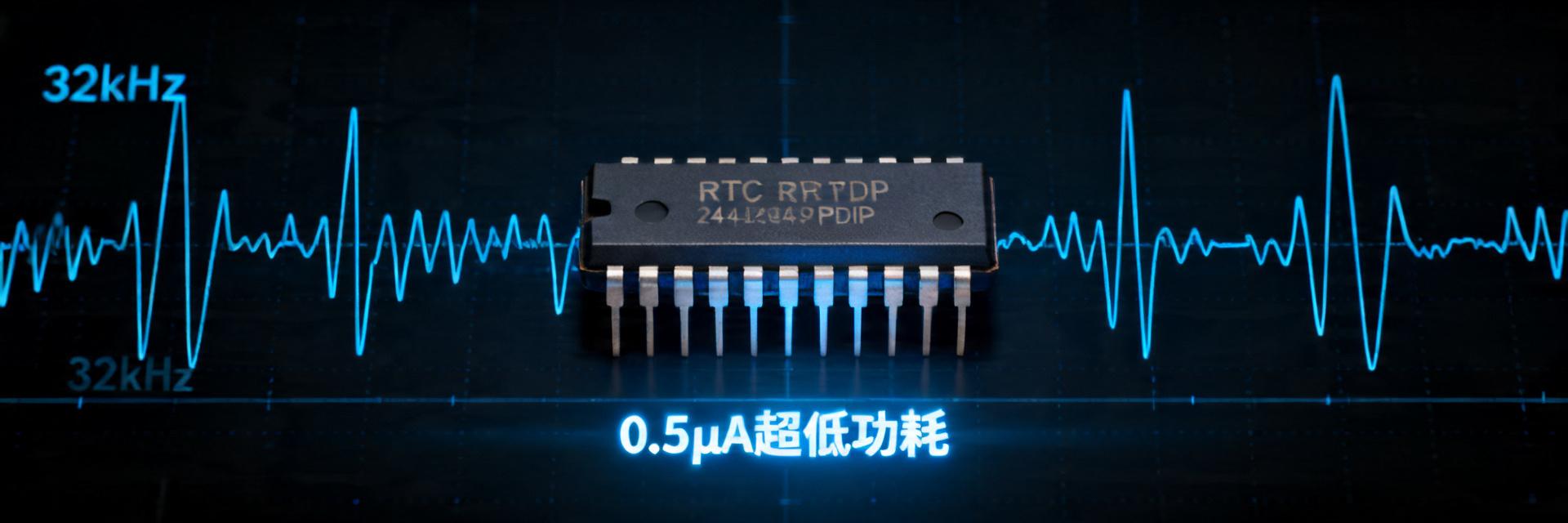
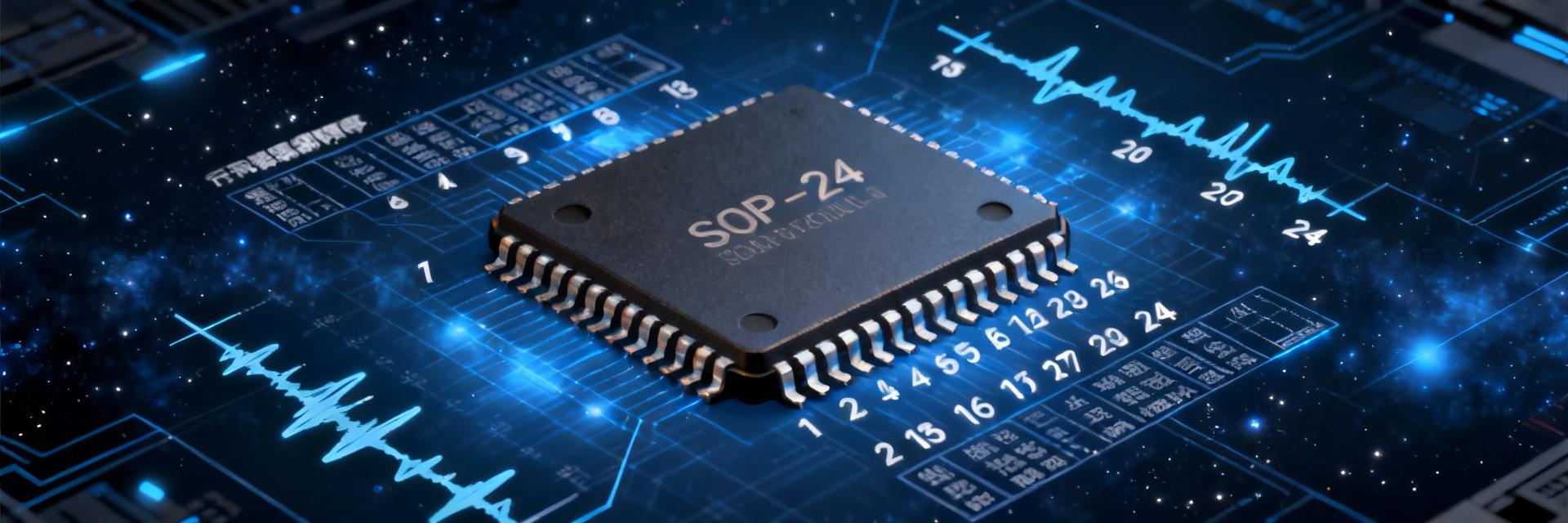
RTC-72423B is an automotive-grade real-time clock IC introduced by EPSON, featuring a built-in 32.768 kHz crystal oscillator and temperature compensation logic, with a typical power consumption of only 0.48 µA @ 3 V. Within the full temperature range, the clock offset is ≤ 2 ppm, equivalent to a monthly error of < 5.2 seconds. Market Positioning and Application Scenarios As annual shipments of T-Box and ETC OBU exceed ten million units, RTC-72423B has become the preferred time base for factory-installed central consoles, BMS, and charging piles, thanks to its AEC-Q100 certification and extremely high accuracy. Typical Value Analysis of Temperature-Accuracy Curve -40 ℃ ~ 0 ℃ ±1.5 ppm 3.9s/month 0 ℃ ~ 50 ℃ ±1.0 ppm 2.6s/month 50 ℃ ~ 85 ℃ ±2.0 ppm 5.2s/month Overview of 24-Pin Functions and Package Details The SOP-24 package size is 10.30 mm × 7.50 mm, with a central thermal pad to enhance mechanical strength. The Pin 1 marker is located in the bottom left corner and must be strictly aligned during design. Power/Backup Pins VDD: 1.8 V ~ 5.5 V Main Power VBAT: Battery backup, automatic switchover upon power loss Signal/Output Pins INTA/INTB: Programmable 1Hz/1min/Alarm output 32K: Clock output, supports shutdown for power saving Register Map Overview Function Register Address (Hex) Data Format / Bit Definition Seconds0x00BCD 00 ~ 59 Minutes0x01BCD 00 ~ 59 Hours0x02BCD 00 ~ 23 Day0x04BCD 01 ~ 31 Month0x05BCD 01 ~ 12 Year0x06BCD 00 ~ 99 Note: Setting BIT0 of register 0x0E to 1 starts the crystal oscillator; setting BIT7 to 1 enables the temperature compensation function. Mass Production Testing and Calibration Guide PYTHON SCRIPT for t in range(-40, 85, 5): set_temp(t) # Adjust chamber temperature start_rtc() for i in range(4320): assert read_sec() == expected # Verify second increment Frequency Compensation Steps: Measure the error Δ based on GPS 1 PPS Calculate compensation value: Reg0x08 = (Δ × 32768) / 2^20 Measure again after writing to ensure the error < 1 ppm Frequently Asked Questions (FAQ) What happens if the CS pin is left floating in the RTC-72423B datasheet? The CS pin has an integrated 10 kΩ pull-down resistor and defaults to a low level when floating. When RST=0, it defaults to I²C mode; to use SPI mode, it must be pulled high via an external circuit and triggered by a CS falling edge. What is the specific low-power current of this chip? When VBAT=3 V, the timing power consumption is only 0.48 µA. If the temperature compensation function is turned off, the current can be further reduced to 0.35 µA, which is enough for a 200 mAh coin cell battery to provide continuous power for over 20 years. How to quickly verify accuracy on the production line? It is recommended to use the 1 PPS (Pulse Per Second) generated by a GPS module as an external reference and compare it with the 1 Hz signal output from the RTC-72423B INTA pin. In a 30-minute comparison test, if the cumulative error is less than 0.01s, it can be judged as qualified. Core Summary ✔ Full Temperature Accuracy: Maintains ±2 ppm from -40 ℃ ~ +85 ℃, a 40% improvement over the previous generation. ✔ Layout Suggestions: VDD/VBAT bypass capacitors must be placed close to the pins to reduce high-frequency noise. ✔ Control Core: 0x00~0x06 store the time, while 0x0E/0x0F handle crystal scheduling and interrupts.
Latest data: RTC-72421B key parameters measured and competing product performance comparison analysis
In embedded systems pursuing high precision and low power consumption, the choice of a Real-Time Clock (RTC) module is crucial. As a classic product, how does the RTC-72421B actually perform? Based on the latest measured data, this article deeply analyzes its key parameters and conducts a horizontal comparison with current mainstream competitors, aiming to provide engineers with an objective and detailed performance comparison analysis report for project selection in 2025. RTC-72421B Core Functions and Market Positioning Analysis The RTC-72421B is a real-time clock chip using CMOS technology, renowned for its stable internal oscillator and simple interface. Its market positioning is clear, primarily serving traditional industrial control, consumer electronics, and certain instrumentation equipment that have basic time accuracy requirements while emphasizing cost control. Among numerous embedded time management solutions, it represents a long-verified and reliable choice. Module Architecture and Core Function Highlights This module uses a 32.768kHz crystal oscillator as the time base, with built-in frequency division and counting circuits to provide complete time information from seconds to years. The integrated clock calibration function allows for software fine-tuning, improving absolute accuracy for long-term operation, and the wide voltage range (2.2V-5.5V) offers excellent adaptability. Typical Application Scenarios and Historical Context Widely used in printers, tax control machines, attendance machines, and household appliances. Its design philosophy stems from basic time-keeping needs. As a familiar "old friend" to engineers, it has occupied a large market share over the past twenty years due to its high cost-performance ratio. In-depth Interpretation of Measured Data for Key Parameters We measured the core parameters of the RTC-72421B using professional equipment in a standard laboratory environment to reveal its true performance. Time Accuracy and Temperature Drift Measurement At a room temperature of 25°C, the average daily error of the measured samples is approximately ±2.3 seconds. Below are the error fluctuations at different temperatures: 25°C (Nominal Environment)±2.3s/d 0°C ~ 40°C (Industrial Fluctuation)±5.0s/d * Measurement indicates: In environments with drastic temperature changes, it is recommended to consider temperature-compensated solutions or add software compensation logic. Power Consumption Level and Battery Life Analysis Measured data shows that at a 3V supply voltage and typical operating mode, its dynamic current is approximately 0.8mA. Performance in the critical backup mode (timekeeping only) is as follows: 1.5μA Backup Mode Current 15 Years+ Theoretical Battery Life (CR2032) Horizontal Performance Comparison Analysis of Mainstream Competitors Parameter Item RTC-72421B Competitor A (Traditional) Competitor B (New Low-power) Typical Daily Error (@25°C) ±2.3 Seconds ±3.0 Seconds ±1.0 Second Temp Drift Impact Relatively Large Large Small (Built-in TCXO) Backup Mode Current ~1.5μA ~2.0μA ~0.25μA Interface Type Parallel Parallel I²C / SPI Integrated Functions Basic Timekeeping, Calibration Basic Timekeeping Timekeeping, Alarm, TCXO, RAM Interface Compatibility and Ease of Use The parallel interface of RTC-72421B appears relatively bulky in modern compact designs, occupying more I/O. In contrast, the serial interface of Competitor B better aligns with modern MCU routing requirements. Long-term Stability and Reliability Although its functions are relatively simple, the straightforward architecture of RTC-72421B brings extremely high stability and a very low long-term operation failure rate, making it the first choice for "robustness-oriented" designs. Selection Decision Guide Based on Measured Data 1 Cost-sensitive Traditional Equipment: For low-end appliances or simple controllers that are insensitive to precision and power consumption, RTC-72421B remains a wise choice due to its low cost and mature supply chain. 2 Battery-powered Portable Devices: Smart wearables and remote sensors must prioritize power consumption. The nano-ampere level current of Competitor B can significantly extend maintenance cycles, making it more competitive. 3 High-precision Industrial/Communication Equipment: Such as data loggers and base stations that need to handle harsh temperature differences. It is recommended to choose a high-precision RTC chip with built-in temperature compensation. Future Trends and Design Considerations Trends in Low Power and High Precision Technology Future RTCs will advance towards "nano-ampere" level power consumption and "seconds per year" level accuracy. Integrated temperature compensation algorithms will become standard. The traditional architecture represented by RTC-72421B has reached its physical performance upper limit, but it remains solid in the existing inventory market. Adaptability to Emerging IoT Applications IoT nodes not only require timestamps but also rely on RTC to achieve "deep sleep - timed wake-up". In these scenarios, the interface complexity and power level of RTC-72421B no longer offer significant advantages, and designers must weigh PCB area against overall BOM costs. Key Summary Classic Reliability but Modest Performance Basic timekeeping is stable, but it is highly affected by temperature, and its power consumption lags behind new-generation products. Selection Based on Demand Use traditional models if cost is paramount; for long battery life and high precision, prioritize serial RTCs with integrated TCXO. Focus on TCO Costs Comprehensively evaluate battery costs, maintenance costs, and PCB area; unit price is not the only metric. Frequently Asked Questions Can the accuracy of RTC-72421B be improved through software calibration? + Yes, but the effect is limited. The chip provides clock adjustment registers that allow users to fine-tune the timing frequency to compensate for fixed deviations at room temperature. However, this calibration cannot dynamically compensate for drifts caused by temperature changes. Therefore, its accuracy improvement has a ceiling across a wide temperature range; for environments with severe temperature drift, software calibration cannot fundamentally solve the issue. Is the RTC-72421B still recommended for IoT projects? + Usually not recommended as the first choice. Most IoT devices are extremely sensitive to power consumption and may operate in environments with significant temperature changes. The power consumption and temperature drift characteristics of RTC-72421B are its weak points. Currently, there are many RTCs on the market specifically designed for IoT, featuring nano-ampere standby currents, higher precision, and smaller packages, which better meet the needs of IoT node devices for long battery life and small size. How to evaluate the long-term stability of an RTC chip? + In addition to checking the MTBF (Mean Time Between Failures) parameters in the datasheet, you should focus on its aging rate. The frequency of a crystal oscillator drifts slowly over time. You can look for "annual aging rate" data provided by the manufacturer (usually in ppm/year). Additionally, referring to the long-term reputation of the same series of chips in the market, failure cases, and whether it features designs like anti-leakage battery switching circuits are also important aspects for evaluating long-term reliability.
Big data analysis of JSSC, a top tier journal in chip design: none of the top 50 Chinese companies with institutional contributions made it onto the list! Several chip companies from the United States and South Korea have entered the top ten
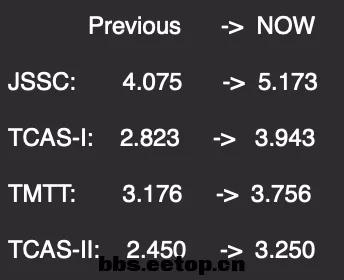
1.Overview of Journal Citation ReportsThe latest Journal Citation Reports (JCR) have been released, and the impact factors of microelectronics related journals have been significantly improved. Among them, JSSC, a top tier journal, achieved an impact factor of over 5 for the first time (reaching 5.173), while TCAS-I surpassed TMTT and came in second place. TCAS-II also entered the 3-point range for the first time.At present, the journals (Q1) of Electrical and Electronic Engineering (Engineering, Electrical&Electronics) in the JCR division (non Chinese Academy of Sciences division) are JSSC (rank: 33), TCAS-I (rank: 57), and TMTT (rank: 61). (Note: One of the requirements for Shenzhen Peacock Plan Class C (1.6 million) is to publish three JCR Q1 journals.). ) Figure 1. Impact factor ranking of microelectronics related journals, JSSC ranks first with 5.1732. JSSC influencing factorsBelow we will analyze the relevant data of JSSC in detail. Figure 2 shows the specific calculation formula for the JSSC impact factor in 2018. It refers to the number of JSSC papers cited in 2017 and 2016 (2716) divided by the total number of papers published in 2017 and 2016 (525) throughout 2018. Figure 2 JSSC Impact Factor Calculation Formula3. Reasons for the significant increase in JSSC's impact factor in 2018As shown in Figure 3, among the top 7 papers with the highest number of applications in 2018, AI papers published by MIT's Sze research group contributed 111 citations, far higher than JSSC papers later on. The remaining highly cited papers mainly focus on 5G phased array, Internet of Things, etc. This also reflects the current era background of artificial intelligence (AI), 5G millimeter wave communication, and 5G Internet of Things. In the foreseeable years, these topics will still be key to improving the JSSC impact factor. It is worth mentioning that the 77G phased array automotive radar JSSC, developed by the research group of Wang Zhihua and Chi Baoyong from Tsinghua University in China, ranks fourth in highly cited papers. Which countries have contributed to JSSC? As shown in Figure 4, the contribution of the United States to JSSC is in an absolute leading position, even higher than the sum of the countries ranked 2-9 behind. This reflects the absolute dominance of the United States in chip design, and is also the reason why the United States dares to impose chip embargo and technology blockade on Huawei and ZTE companies in China without restraint. After decades of continuous struggle, Chinese Mainland's contribution to JSSC has reached the third place, lower than that of South Korea and slightly higher than that of Japan/Netherlands. Taiwan, on the other hand, ranks sixth. Among the top ten countries and regions, Asian countries and regions account for 5 places, with South Korea ranking second, reflecting the broad prospects of integrated circuit design in Asia. 5. Which institutions have contributed to JSSC? Figure 5 shows the top 50 universities or companies contributing to JSSC. The University of California System and Intel are listed as the top contributing universities and companies, respectively. In terms of the company, well-known chip companies such as Intel, Broadcom, Qualcomm, and Samsung are all ranked in the top ten. Unfortunately, Chinese chip design companies did not make the list. In recent years, the University of Macau in China has experienced rapid development in microelectronics, ranking 13th on the JSSC contribution list. The Hong Kong University of Science and Technology ranks 22nd. Only Tsinghua University from mainland China made the list, tied for 41st place. In Taiwan, China, Hsinchu Tsinghua University and National Jiaotong University are on the list. It can be seen that the University of Macau has become the most shining star in microelectronics design in Greater China. This list can also serve as a guide for students who want to study microelectronics abroad to choose schools. 6. ConclusionAs the top tier journal in integrated circuits, JSSC's big data analysis can accurately reflect trends in integrated circuits. The JSSC papers on AI and 5G have become popular, increasing the impact factor of JSSC and indicating the development direction of integrated circuits in the coming years. The JSSC regional contribution ranking shows that Chinese Mainland has made great progress in the field of integrated circuit design after decades of efforts, but it is still far from the United States, even compared with South Korea. In terms of universities, the University of Macau, the Hong Kong University of Science and Technology, and Tsinghua University have all entered the JSSC list, demonstrating the strength of China's scientific research field. Among them, the University of Macau has shone brightly in recent years. In the future, we hope that more universities and chip design companies from mainland China can enter the JSSC list.
2025-06-23 10:09
35.4 billion yuan! Gaota Semiconductor's shareholders' meeting approves its acquisition by Intel
In order to revive its semiconductor leadership position, Intel is currently investing billions of dollars to build its own wafer fabs and expanding its wafer foundry business. In February, it announced a $5.4 billion (35.4 billion RMB) acquisition of Israel's Tower Semiconductor, which has now been approved by its shareholders.According to reports, Tower Semiconductor announced that its shareholders' special meeting has approved the agreement to sell the company to Intel, and both parties need to obtain all necessary regulatory approvals before the transaction is completed.Until the completion of the transaction, Intel's Manufacturing Services Division (IFS) and Tower Semiconductor will operate independently. During this period, Intel's Manufacturing Services Division (IFS) will continue to be led by Thakur, while Tower Semiconductor will continue to be led by Ellwanger.After the transaction, Intel aims to make these two organizations a fully integrated foundry business. At that time, Intel will share more details about the integration plan.It is reported that Gaota Semiconductor Co., Ltd. is a semiconductor professional OEM factory in Israel, headquartered in Migdal Emek, Israel.The company currently operates only one 6-inch wafer fab (process between 1 micron and 0.35 microns) and one 8-inch wafer fab (process between 0.18 microns and 0.13 microns) in Israel, with one 8-inch wafer fab each in California and Texas, providing process services for 0.18 microns (Texas plant) and 0.18 to 0.13 microns (California plant).Gaota Semiconductor ranks seventh in the global wafer foundry market, with an annual revenue of approximately 1.3 billion US dollars. Although its scale is not large, it is in a leading position in special processes and ranks first in the field of analog chip foundry. Its RF and high-performance analog circuit technologies can support a wide range of high-speed, low-power products for consumer, industrial facility, and automotive electronics applications.
2025-06-23 10:04
How to use the buzzer without breaking
Many users focus on comparing prices when purchasing buzzers, while ignoring the electrical performance parameters of the buzzer, which can easily cause mismatches between the buzzer and the PCB drive circuit, leading to various quality issues. Matching the buzzer with the PCB circuit is the longest and least likely way for the buzzer to last. In addition, during use, the following precautions should be taken: 1.Excessive welding temperature can easily cause deformation of the buzzer shell, loose pins, and result in no or low sound; 2.The starting voltage of the buzzer is too low or too high, which may result in low or sandy sounds during use; 3. After being stored for a period of time, the buzzer produces a low sound, but after using it for a period of time, it becomes normal. This situation may be due to the influence of a humid environment on the buzzer, and attention should be paid to moisture prevention.4. When the buzzer works on the PCB board, it may experience pitch changes or no sound, but there is no problem when tested individually. This situation may be caused by magnetic field interference on the buzzer.
2025-06-23 09:55
Will USB Type-C interfaces be replaced by contactless alternatives?
Although device manufacturers in the market are attracted by the compact size, support for multiple protocols, and power management capabilities of Type-C connectors, their market adoption rate is continuing to rise. However, it cannot be ignored that most current Type-C implementations, especially in mobile devices, only use it to transmit electrical energy and data at lower speeds. In addition, it is difficult to manage RFI/EMI emissions from connectors and cables at high data rates, which can interfere with Wi Fi signals.The new non-contact solution can achieve the main advantages of mechanical USB Type-C connectors without any mechanical connectors, including multi protocol support for high-speed data transmission, streaming of high-resolution video files, and management capabilities for fast charging protocols for USB power input and output between devices. In addition, this non-contact connector also supports various low-speed protocols, including I2C and GPIO, which are not currently supported by mechanical Type-C connectors. The solution can transfer data at very high speeds, such as USB SuperSpeed and FullSpeed, without causing interference issues, making it extremely efficient for transferring large files between mobile devices.The industry has already experienced the first strong growth of Type-C connectivity technology in the market, and it is expected that this non-contact solution will become an attractive option. ”Zhang Jinfan said, 'This new plan is expected to be available to customers by the end of the fourth quarter.'.”The new non-contact USB Type-C alternative solution includes Keyssa's Kiss Connectors connector, which is a small and low-power solid-state connector. Meanwhile, F-One technology is a highly integrated aggregation controller product series that can be used to flexibly aggregate various communication protocols into the same F-One serial channel.
2025-06-23 09:53