

In embedded systems pursuing high precision and low power consumption, the choice of a Real-Time Clock (RTC) module is crucial. As a classic product, how does the RTC-72421B actually perform? Based on the latest measured data, this article deeply analyzes its key parameters and conducts a horizontal comparison with current mainstream competitors, aiming to provide engineers with an objective and detailed performance comparison analysis report for project selection in 2025.
RTC-72421B Core Functions and Market Positioning Analysis
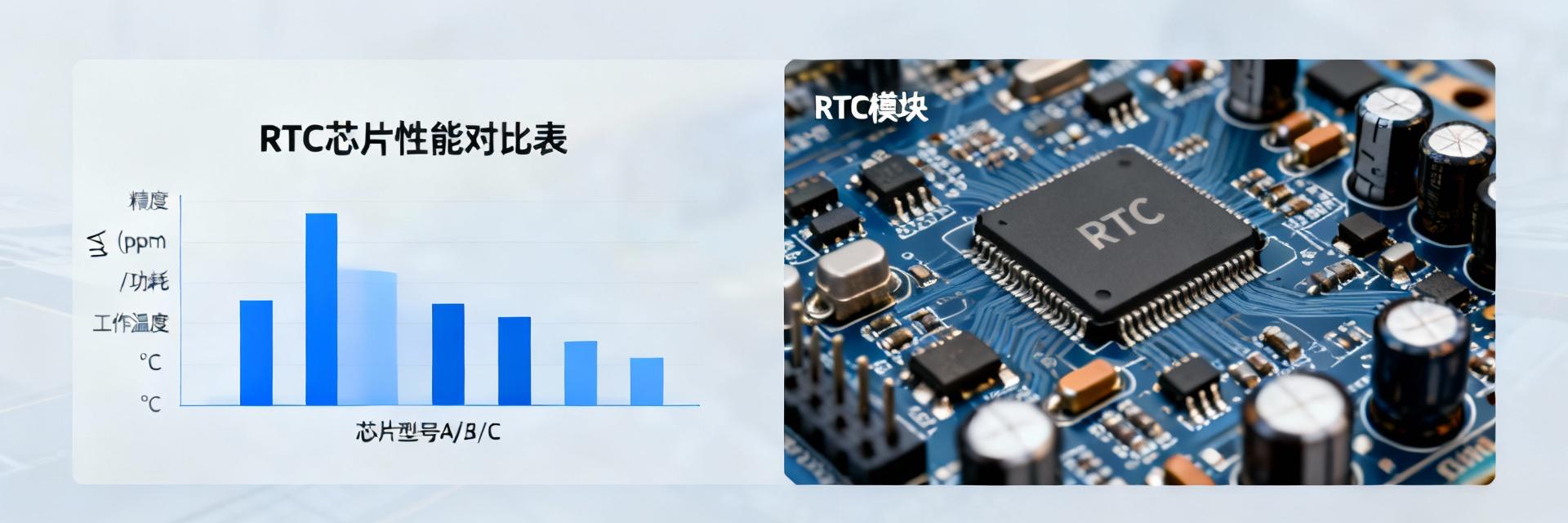
The RTC-72421B is a real-time clock chip using CMOS technology, renowned for its stable internal oscillator and simple interface. Its market positioning is clear, primarily serving traditional industrial control, consumer electronics, and certain instrumentation equipment that have basic time accuracy requirements while emphasizing cost control. Among numerous embedded time management solutions, it represents a long-verified and reliable choice.
Module Architecture and Core Function Highlights
This module uses a 32.768kHz crystal oscillator as the time base, with built-in frequency division and counting circuits to provide complete time information from seconds to years. The integrated clock calibration function allows for software fine-tuning, improving absolute accuracy for long-term operation, and the wide voltage range (2.2V-5.5V) offers excellent adaptability.
Typical Application Scenarios and Historical Context
Widely used in printers, tax control machines, attendance machines, and household appliances. Its design philosophy stems from basic time-keeping needs. As a familiar "old friend" to engineers, it has occupied a large market share over the past twenty years due to its high cost-performance ratio.
In-depth Interpretation of Measured Data for Key Parameters
We measured the core parameters of the RTC-72421B using professional equipment in a standard laboratory environment to reveal its true performance.
Time Accuracy and Temperature Drift Measurement
At a room temperature of 25°C, the average daily error of the measured samples is approximately ±2.3 seconds. Below are the error fluctuations at different temperatures:
* Measurement indicates: In environments with drastic temperature changes, it is recommended to consider temperature-compensated solutions or add software compensation logic.
Power Consumption Level and Battery Life Analysis
Measured data shows that at a 3V supply voltage and typical operating mode, its dynamic current is approximately 0.8mA. Performance in the critical backup mode (timekeeping only) is as follows:
Horizontal Performance Comparison Analysis of Mainstream Competitors
Interface Compatibility and Ease of Use
The parallel interface of RTC-72421B appears relatively bulky in modern compact designs, occupying more I/O. In contrast, the serial interface of Competitor B better aligns with modern MCU routing requirements.
Long-term Stability and Reliability
Although its functions are relatively simple, the straightforward architecture of RTC-72421B brings extremely high stability and a very low long-term operation failure rate, making it the first choice for "robustness-oriented" designs.
Selection Decision Guide Based on Measured Data
- 1 Cost-sensitive Traditional Equipment: For low-end appliances or simple controllers that are insensitive to precision and power consumption, RTC-72421B remains a wise choice due to its low cost and mature supply chain.
- 2 Battery-powered Portable Devices: Smart wearables and remote sensors must prioritize power consumption. The nano-ampere level current of Competitor B can significantly extend maintenance cycles, making it more competitive.
- 3 High-precision Industrial/Communication Equipment: Such as data loggers and base stations that need to handle harsh temperature differences. It is recommended to choose a high-precision RTC chip with built-in temperature compensation.
Future Trends and Design Considerations
Trends in Low Power and High Precision Technology
Future RTCs will advance towards "nano-ampere" level power consumption and "seconds per year" level accuracy. Integrated temperature compensation algorithms will become standard. The traditional architecture represented by RTC-72421B has reached its physical performance upper limit, but it remains solid in the existing inventory market.
Adaptability to Emerging IoT Applications
IoT nodes not only require timestamps but also rely on RTC to achieve "deep sleep - timed wake-up". In these scenarios, the interface complexity and power level of RTC-72421B no longer offer significant advantages, and designers must weigh PCB area against overall BOM costs.
Key Summary
Basic timekeeping is stable, but it is highly affected by temperature, and its power consumption lags behind new-generation products.
Use traditional models if cost is paramount; for long battery life and high precision, prioritize serial RTCs with integrated TCXO.
Comprehensively evaluate battery costs, maintenance costs, and PCB area; unit price is not the only metric.